The global edge computing market is on track to reach $156 billion by 2030. Real-time AI inference, latency-sensitive applications, and data sovereignty requirements are pulling critical workloads away from centralised cloud — and the infrastructure decisions you make in the next 18 months will define your competitive position for the decade ahead.
When cloud computing became the dominant infrastructure paradigm roughly fifteen years ago, the promise was straightforward: move everything to a centralised data centre managed by someone else, pay for what you use, and stop worrying about physical infrastructure. For a remarkable range of workloads, that promise delivered. But in 2025, a growing category of use cases has exposed the fundamental constraint that centralised cloud was never designed to solve — and the industry is in the middle of a structural response that every infrastructure leader needs to understand.
The constraint is physics. Light travels through fibre optic cable at roughly two thirds the speed of light in a vacuum. That means a round trip between a device in a factory in Stuttgart and a cloud data centre in Frankfurt takes somewhere between 5 and 15 milliseconds under good conditions — and significantly more when network congestion, routing complexity, or distance compound the baseline. For most enterprise applications, this latency is irrelevant. For autonomous vehicles making real-time safety decisions, for surgical robots responding to a surgeon's movements, for quality inspection systems on a high-speed production line, or for financial trading systems where microseconds determine profitability, the physics of centralised cloud are simply incompatible with the application requirement.
Edge computing — processing data at or near the point where it is generated, rather than routing it to a distant data centre — is the architectural response to this constraint. And what has changed in 2025 is not the concept, which has been discussed for years, but the maturity of the enabling technologies, the commercial availability of edge hardware at enterprise-grade scale, and the proliferation of real-world use cases that have moved edge from experimental to essential in several industries simultaneously.
Edge computing distributes processing capacity across a network of nodes positioned close to data sources — fundamentally changing the latency, bandwidth, and data sovereignty profile of enterprise applications.
What Is Actually Driving Edge Adoption in 2025
The edge computing market is not growing because infrastructure teams have decided to complicate their architectures for its own sake. It is growing because three specific forces have matured simultaneously to make edge not just viable but necessary for a significant and expanding set of enterprise workloads.
The first is AI inference at the edge. Training large AI models in the cloud is appropriate — it is computationally intensive, does not require real-time response, and benefits from the scale and elasticity that centralised cloud provides. But running trained models in production — making predictions, detecting anomalies, classifying images, responding to events — increasingly needs to happen where the data is generated, not where it was trained. A computer vision model inspecting components on a production line cannot tolerate the round-trip latency of sending images to a cloud endpoint for inference. It needs to run locally, on hardware positioned at or near the line, with response times measured in milliseconds. IDC projects that by 2025, more than 75% of enterprise-generated data will be created and processed at the edge rather than in a traditional data centre or cloud — a figure that reflects this inference-at-the-edge imperative across industries.
The second force is data volume economics. The cost of moving data from where it is generated to where it is processed is not zero — it involves bandwidth costs, latency overhead, and increasingly significant cloud egress fees that catch many organisations off guard when their data volumes scale. A connected factory generating terabytes of sensor data per day faces a genuine economic calculation about how much of that data needs to travel to the cloud for processing versus how much can be processed locally with only the results or aggregated insights sent upstream. For many industrial applications, the answer is that most data should never leave the facility — not for cost reasons alone, but because only a small fraction of raw sensor data is analytically meaningful, and the signal extraction can happen at the edge far more efficiently than shipping raw data to the cloud.
The third force is data sovereignty and regulatory compliance. GDPR in Europe, the DPDP Act in India, and equivalent frameworks emerging across jurisdictions impose constraints on where personal data can be processed and stored that are genuinely difficult to satisfy with architectures that route all data through data centres in specific geographic locations. Edge computing, by processing data locally and sending only aggregated or anonymised results upstream, is increasingly the architectural solution that allows global organisations to build applications that respect data residency requirements without maintaining separate full cloud deployments in every jurisdiction.
5G as the Enabler Nobody Budgeted For
The commercial deployment of 5G at enterprise scale — private 5G networks within industrial facilities specifically — is the connectivity layer that makes edge computing practical at the density and reliability that industrial applications require. The combination of 5G's low latency, high device density support, and network slicing capabilities with edge computing's local processing creates an infrastructure foundation for applications that were genuinely impossible at scale even three years ago.
Private 5G deployments in manufacturing, logistics, and healthcare facilities are growing rapidly precisely because they solve the wireless connectivity problem that has historically limited IIoT density inside industrial environments. The resulting architecture — edge compute nodes connected via private 5G to hundreds or thousands of sensors and devices, with selective connectivity to cloud for aggregated analytics and model updates — is becoming the reference architecture for the industrial IoT deployments delivering the strongest operational results in 2025.

The convergence of 5G connectivity, edge compute hardware, and AI inference capabilities is enabling industrial IoT applications that centralised cloud architectures cannot support.
Where Edge Is Delivering Real Business Value
Across industries, the edge use cases generating the clearest and most broadly validated returns share a common characteristic: they require decisions to be made faster than network round-trip times allow, on data volumes too large or too sensitive to economically route to the cloud.
In manufacturing, real-time quality inspection using computer vision at the edge is reducing defect escape rates by processing images from high-speed production lines at frame rates that cloud inference cannot sustain. Predictive maintenance models running on edge compute nodes positioned at critical assets are detecting anomalies within seconds of their occurrence rather than minutes or hours later when data reaches a central system. Energy management systems processing power consumption data locally are optimising load in real time rather than based on the batch data that cloud-connected systems receive.
In retail, edge computing is powering the in-store intelligence that omnichannel retail strategies require. Computer vision systems that analyse shelf availability, queue length, and customer flow patterns in real time — without sending video footage to cloud infrastructure that raises privacy concerns and creates bandwidth costs — are giving store operations teams the situational awareness that was previously only available through manual observation. Self-checkout systems, loss prevention intelligence, and dynamic pricing systems that respond to in-store conditions all benefit from edge processing that keeps sensitive data local and response times fast.
In healthcare, edge computing is enabling clinical-grade applications that data sovereignty requirements make impossible to build on public cloud infrastructure. Patient monitoring systems that process physiological data locally and alert clinical staff to deterioration in real time — without that data leaving the clinical network — are a genuine capability improvement over systems that require cloud connectivity to function. Diagnostic imaging applications that run AI inference locally, on dedicated edge hardware within radiology departments, are delivering response times that support clinical workflow integration in ways that cloud-dependent systems cannot.
In financial services, ultra-low latency trading infrastructure at the edge — co-located as close as physically possible to exchange matching engines — represents the most extreme version of edge computing's value proposition, where milliseconds of latency reduction translate directly into measurable competitive advantage. But the edge computing principle applies more broadly across financial services in fraud detection systems that need to make accept or decline decisions in the milliseconds before a transaction completes, and in risk management systems processing market data streams at rates that centralised architectures cannot sustain economically.
The Architectural Reality: Edge and Cloud Are Not Competitors
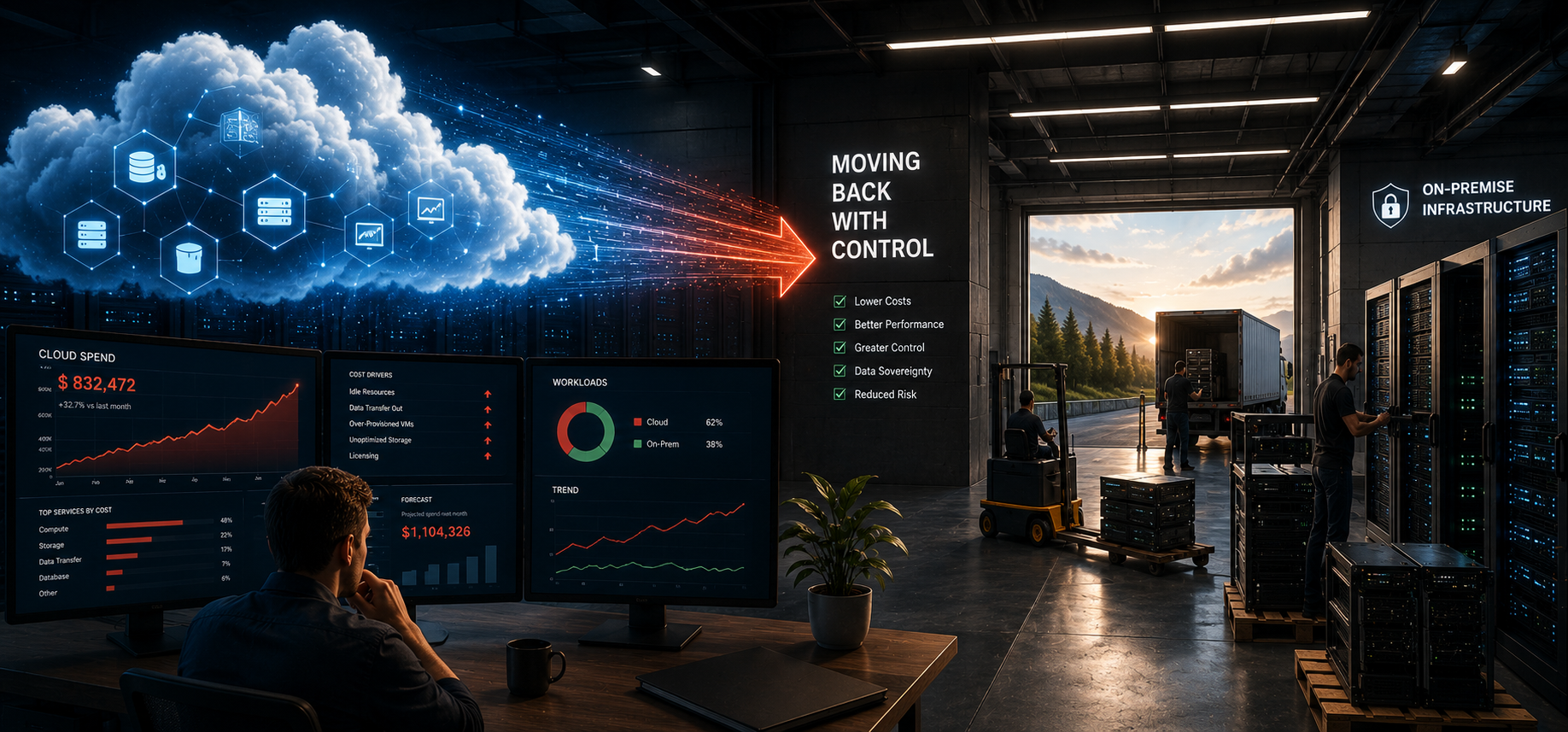
One of the most persistent misconceptions about edge computing is that it represents a retreat from cloud — a return to on-premise infrastructure under a different name. This framing misses the actual architectural pattern emerging across the most sophisticated enterprise deployments, which is not edge replacing cloud but edge and cloud working together as complementary layers of a distributed computing architecture.
The practical reality is that different workloads have different optimal locations for processing. Real-time inference, local automation, and latency-sensitive decision-making belong at the edge. Aggregated analytics, model training, long-term storage, and cross-site intelligence belong in the cloud. Business applications, collaboration tools, and enterprise systems that do not have real-time requirements belong wherever their cost and compliance profile is most favourable — which is often still the cloud. The most sophisticated infrastructure teams are not asking "edge or cloud" — they are building architectures that route workloads to the most appropriate tier based on their specific latency, data volume, and sovereignty requirements.
Managing this distributed architecture introduces genuine complexity that centralised cloud does not. Edge nodes need to be provisioned, updated, monitored, and secured — at scale, often in physically dispersed locations that are not easily accessible to IT staff. The operational tooling for managing edge infrastructure at enterprise scale — orchestration platforms, remote management capabilities, security frameworks appropriate for distributed environments — is maturing rapidly but has not yet reached the maturity level of cloud management tooling. This is a real consideration for infrastructure teams evaluating edge deployments, and it argues for investing in platforms and vendors with strong edge management capabilities rather than treating edge hardware as an extension of traditional on-premise server management.
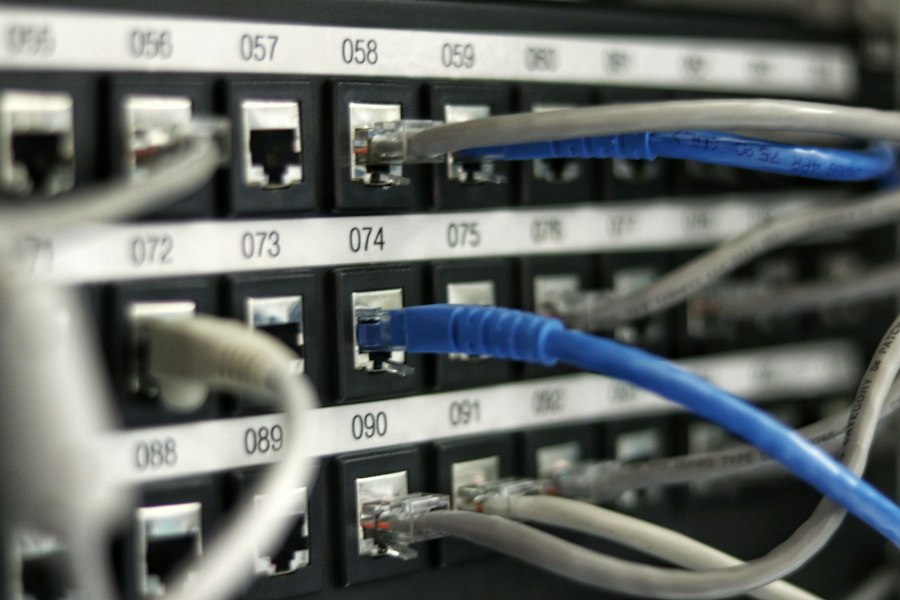
The winning infrastructure architecture of 2025 is neither pure cloud nor pure edge — it is a deliberately designed hybrid where workloads are placed at the tier that best fits their latency, data volume, and compliance requirements.
The Security Implications Infrastructure Leaders Cannot Ignore
Every edge node is a potential attack surface. The security implications of distributing compute capacity across dozens or hundreds of physical locations — often in environments with limited physical security controls compared to a data centre — are significant and require deliberate architectural attention rather than an afterthought.
The threat vectors specific to edge infrastructure include physical tampering with hardware in accessible locations, the challenge of maintaining security patch currency across large fleets of distributed devices, and the risk that a compromised edge node becomes a foothold for lateral movement into the broader network. The same connectivity that makes edge nodes useful — their integration with both local operational systems and cloud platforms — makes a compromised edge node a potentially high-value position for an attacker.
The security principles that matter most for edge deployments are zero trust network access — treating every connection to and from an edge node as untrusted and requiring authentication and authorisation regardless of network location — hardware-based security roots of trust that make it difficult to tamper with device identity and software integrity, and automated patch management that can maintain security currency across large distributed fleets without requiring manual intervention at each device location. These are not exotic requirements. They are the same security principles that apply to enterprise infrastructure generally, applied to a deployment model that makes some of them significantly harder to achieve in practice.
What Infrastructure Leaders Should Do Right Now
For technology leaders whose organisations are not yet running significant edge workloads, the strategic question is not whether to engage with edge computing but how to build the organisational capability and infrastructure foundation to deploy it effectively when the use cases demand it — which, for most organisations, is sooner than their current planning horizons reflect.
The most useful first investment is understanding which workloads in your current and planned application portfolio have requirements that centralised cloud cannot satisfy. Latency below 10 milliseconds, data volumes that make cloud egress costs prohibitive, and regulatory requirements that restrict data movement are the clearest indicators. Mapping these requirements against your existing workload portfolio will identify where edge is already needed, where it will be needed within 18 months, and where centralised cloud remains the appropriate choice.
The second investment is building the operational capability to manage distributed infrastructure. Edge deployments at scale are an operational challenge as much as a technical one. Organisations that build the tooling, processes, and team skills for edge fleet management before they need them at production scale will deploy faster and more reliably than those building operational capability simultaneously with their first production deployment.
The third is engaging with the vendor ecosystem early. The edge hardware, connectivity, and software management landscape is evolving rapidly. The vendors investing most heavily in edge management platforms, security frameworks, and AI inference optimisation for edge hardware are the ones whose roadmaps are most worth understanding before making infrastructure commitments. The decisions made in the next 18 months will constrain or enable the edge capabilities available to your organisation for the next five to seven years — treating them with the same strategic seriousness as major cloud platform decisions is the appropriate level of attention.