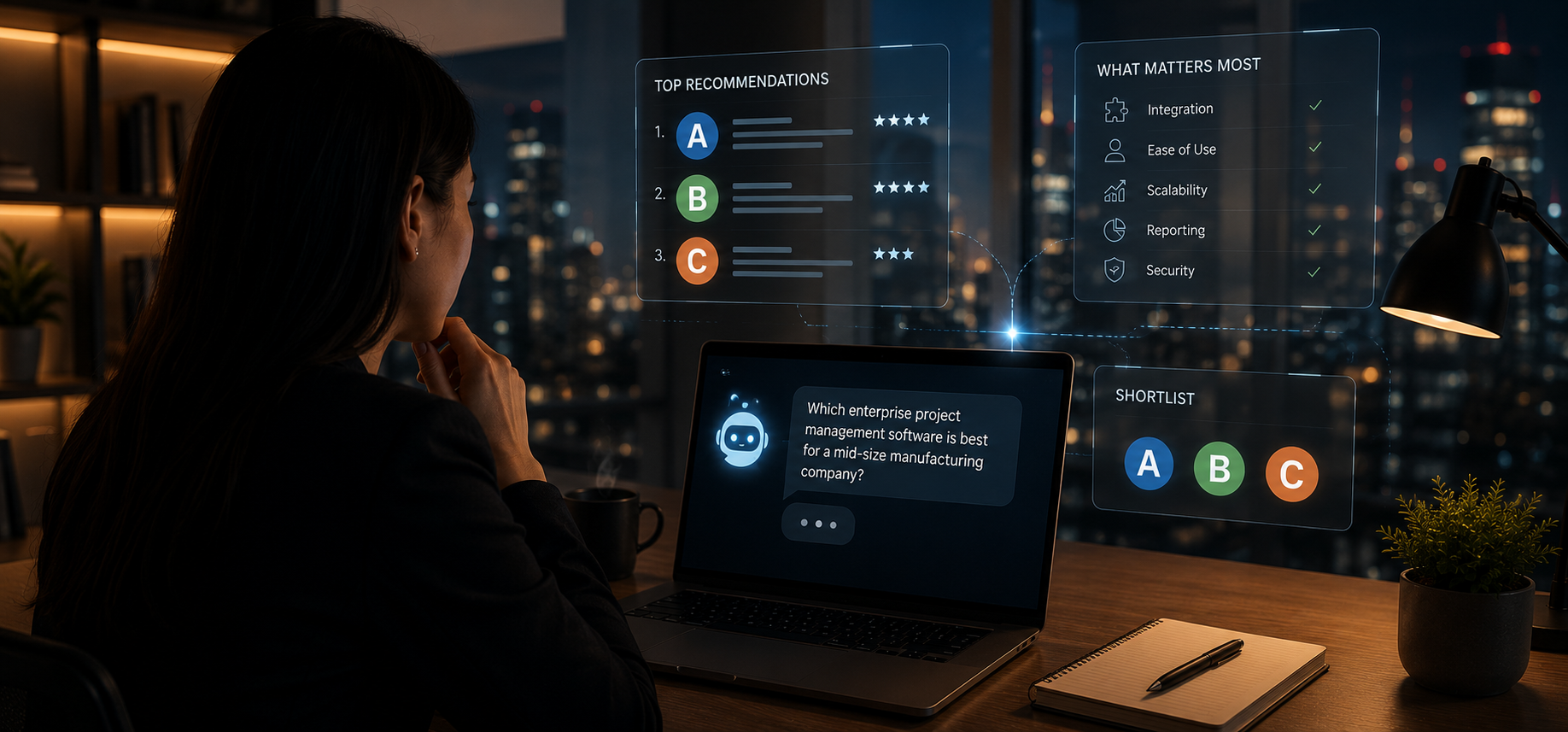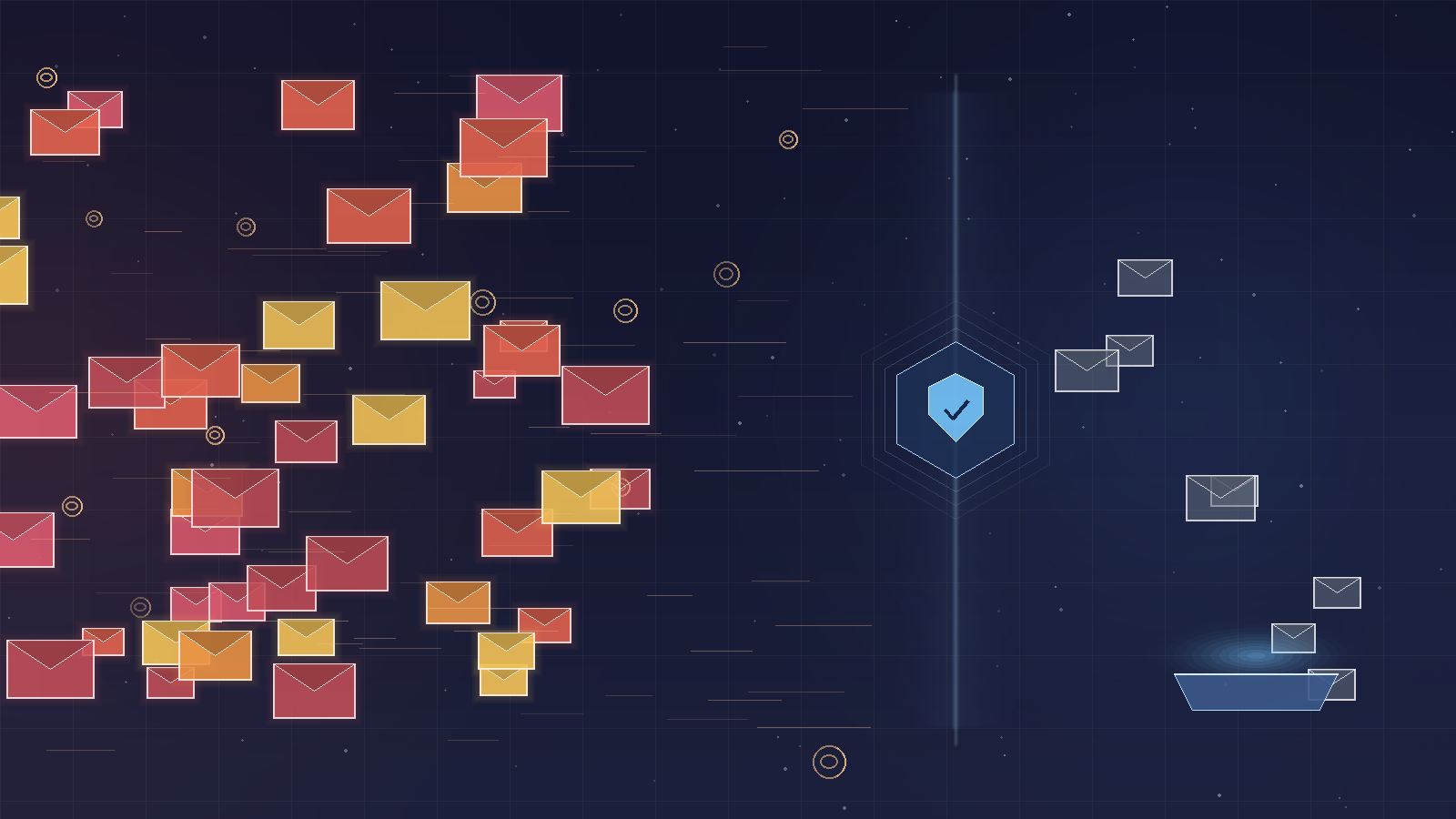
Eighty-nine percent of B2B buyers now use AI tools to screen inbound vendor messages before they read them. Sales teams that have solved their outreach problem with AI-generated personalisation at scale have created a new problem: buyers who have already filtered them out before the conversation starts.
Sales · Business Infomatics Research Desk
The adoption of AI in sales outreach has followed a trajectory that is both entirely predictable and genuinely underappreciated in its implications. AI tools that generate personalised cold emails, research accounts automatically, sequence multi-channel outreach, and optimise send times have been adopted rapidly because they solve a real problem: scaling outreach volume without scaling headcount. The ROI case for these tools, measured by the cost of the tool against the reduction in time per outreach sequence, is straightforward.
What that ROI calculation misses is that the benefit is relative to what competitors are doing, and when every sales team in a category is using the same AI tools to generate the same quality of personalised outreach at the same scale, the net effect is not that everyone is better off. It is that the signal-to-noise ratio in every buyer's inbox has collapsed, buyers have developed both psychological and technical defences against the resulting flood, and the absolute conversion rate from AI-generated outreach has continued to decline even as the tools have improved. A 2026 Forrester survey found that 89 percent of B2B buyers now use AI assistants to pre-screen vendor emails, 71 percent delete what they identify as AI-generated outreach within three seconds, and 67 percent say they can reliably identify AI-written messages. The arms race has produced a world in which buyers are as well-equipped as sellers, and the equilibrium is not favourable to volume outreach of any kind.
Cold outreach reply rates declining steadily since 2018, while warm/referred outreach holds steady. The gap widens as AI-generated volume flooding intensifies. Source: Salesloft, Gong composite data.
89% of B2B buyers use AI to pre-screen vendor emails. 71% delete AI-generated outreach within 3 seconds of identifying it. (Forrester, 2026)
What Buyers Are Actually Filtering For
Understanding what triggers buyer filtering is more useful than lamenting the trend. Buyers have not become categorically hostile to cold outreach — they have become hostile to outreach that is indistinguishable from the thousands of other cold outreach messages they receive from sales teams running the same playbooks with the same tools. The specific signals that mark a message as AI-generated and therefore filterable have been studied enough to produce a reasonably clear picture.
Generic personalisation tokens are the most visible marker. Opening an email with a reference to a recent company announcement, a shared LinkedIn connection, or a comment about the buyer's role that could apply to anyone in that role does not signal genuine familiarity — it signals that a tool scraped a LinkedIn profile. The buyer can tell the difference because a genuinely engaged human following their company would say something that demonstrates they have read and thought about what they found, not just retrieved and inserted it.
Structure is the second tell. AI-generated sales emails have a consistent architecture: opening reference to something about the buyer, transition to a problem statement, product pitch, and call to action. The structure is trained because it has historically performed, and because everyone is using the same training data, the structural pattern has become as recognisable as the personalisation tokens. Human-written emails have irregular structure, arrive at the point in different ways, and occasionally contain observations that only someone with genuine context would include.
How B2B buyers respond to AI-generated outreach. 88% would engage a rep who demonstrated genuine contextual knowledge — the benchmark for what converts. Source: Forrester B2B Buying Survey, 2026.
The Human Premium in B2B Sales
The irony of the AI outreach flood is that it has dramatically increased the relative value of genuinely human interaction in the sales process. When every vendor is in a buyer's inbox with AI-personalised sequences, the seller who calls with genuine knowledge of the buyer's specific situation, who references something they read that the buyer actually wrote rather than something scraped from their company page, who follows up with something useful rather than a variant of 'just checking in' — that seller stands out not because they are exceptional but because they are doing something that most of their competitors have automated away.
This is not an argument against using AI in sales. It is an argument for using it on the right tasks and understanding where human engagement is not a nice-to-have but the primary source of competitive differentiation. The tasks where AI creates genuine productivity leverage — account research, data entry, scheduling, first-draft copy that humans then significantly rewrite, scoring and prioritisation — are different from the tasks where human presence is what produces the outcome. Conflating them, or assuming that AI can replicate the latter by improving its performance on the former, is the error that is producing declining conversion rates despite increasing investment in AI sales tools.
Where AI creates competitive advantage vs. where human engagement remains irreplaceable in B2B sales. The winning teams deploy both deliberately, not interchangeably. Source: Business Infomatics framework.
The Referral Network Compounds in a World of AI Noise
One of the clearest data points in the current B2B sales environment is the widening gap between cold outreach conversion rates and referral conversion rates. Cold outreach reply rates have declined from eight percent in 2018 to approximately two percent in 2026. Referral conversion rates have been stable to slightly improving across the same period, remaining in the twenty-five to twenty-eight percent range, because the trust signal embedded in a referral is something that AI-generated outreach cannot replicate or erode.
Sales teams that have invested in systematic referral generation — building formal customer advocacy programmes, creating incentive structures for referrals, and training reps to ask for introductions at the right moments in the customer relationship — are operating with a compounding advantage in a market where the average outreach conversion rate is declining. The investment in customer relationships that produces referrals is also the investment that produces expansion revenue and renewals. The organisations that have understood this are building go-to-market motions that are less reliant on volume outbound and more reliant on the network effects that compound from doing the relationship work well.
Pipeline conversion per 100 meetings: AI-generated vs. human-led. Human-led pipeline converts to closed-won at 2.5× the rate of AI-generated pipeline. Source: Business Infomatics analysis of disclosed implementation data.
What the Best Sales Teams Are Actually Doing
Fewer Sequences, Better Timing, More Context
The teams posting the best outbound conversion rates in 2026 are consistently running fewer sequences than the median and investing the time saved in the quality and contextual relevance of each touchpoint. A ten-email sequence sent to two hundred contacts who match an ICP filter is producing less qualified pipeline than a three-touchpoint sequence sent to forty contacts who have shown a specific intent signal, where each touchpoint demonstrates genuine familiarity with the company's situation and the outreach arrives within the signal's conversion window. This is not a philosophical preference for quality over quantity. It is what the conversion rate data shows.
AI as Research Infrastructure, Not Outreach Infrastructure
The teams getting the highest ROI from AI in their outbound motion are using it primarily for research and prioritisation — generating rich account briefs, identifying the specific triggers and context that would make an outreach message relevant, scoring accounts by fit and intent signal, and routing the right accounts to the right reps. The outreach itself is human-written, built on the AI-generated research, and different enough in its structure and content from AI-generated defaults that it does not trigger the buyer filtering that AI-authored messages consistently encounter. The AI is making the human more informed and better targeted. It is not replacing the human judgment that determines what to say and how to say it.
The Long Game: Becoming Genuinely Known Before You Sell
The sales leaders who are thinking most clearly about the current environment are investing in their own and their team's visibility in the buyer communities where their prospects spend time — industry communities, LinkedIn networks, category-specific forums and events. The pre-sale relationship built through genuine engagement in these communities is the context that makes a cold outreach feel like a warm one, that shortens sales cycles because trust is already partially established, and that produces referral pipeline from people who have seen the seller's thinking and found it credible. This is slower than a high-volume sequence campaign. It is also producing better pipeline in an environment where high-volume sequence campaigns are producing systematically worse results every quarter.