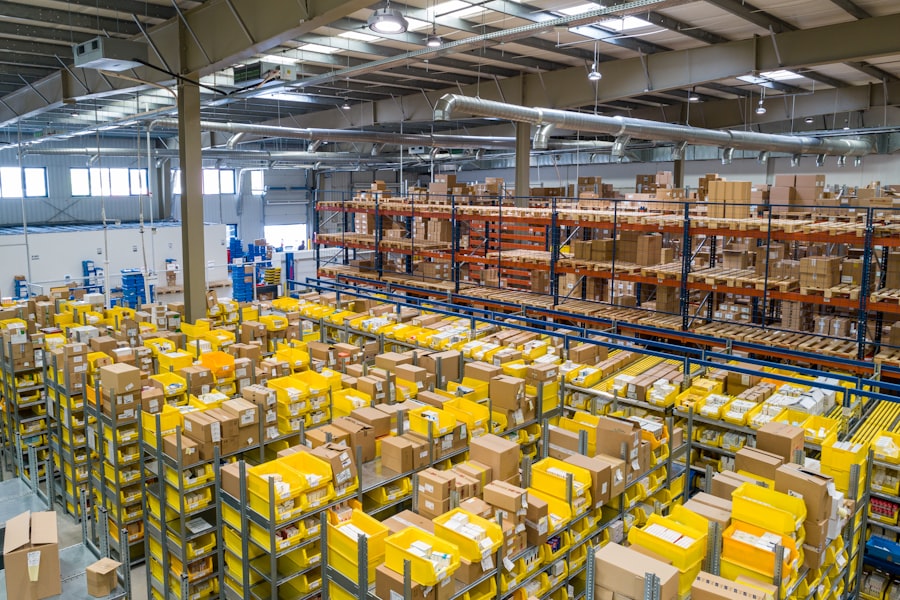
98% of operations leaders say digital tools have improved their end-to-end supply chain visibility. Yet most companies are still managing disruption reactively — patching problems as they arrive rather than building systems that see them coming. In 2025, that gap has become a measurable competitive disadvantage.
Ask any COO what kept them up at night over the past five years and you will get a version of the same answer. A supplier in a single geography going offline. A port congestion event that nobody saw coming. A geopolitical development that invalidated sourcing decisions made two years earlier on the assumption of stability. The supply chain disruptions of the 2020s have been widely documented and widely suffered. What is less discussed is the divergence that has emerged between organisations that used those disruptions as a forcing function to rethink how their supply chains were built — and those that absorbed the cost, waited for things to settle, and returned to doing things largely the same way as before.
In 2025, that divergence is becoming visible in ways that were not yet apparent two years ago. The companies that built supply chain resilience as a strategic capability — investing in digital visibility, supplier diversification, predictive analytics, and flexible sourcing models — are navigating the current environment of tariff uncertainty, geopolitical complexity, and input cost volatility with measurably better outcomes than those that did not. The gap is showing up in margins, in service levels, and in the speed with which leadership can make confident decisions about the business when external conditions shift.
PwC's 2025 Digital Trends in Operations Survey captures the state of this divergence with unusual clarity. Nearly all operations and supply chain leaders — 98 percent — say digital tools have improved visibility into their end-to-end operations. Yet the same survey reveals that most organisations are still at the early stages of extracting the value that visibility enables. Having data is not the same as acting on it. Seeing the supply chain is not the same as being able to manage it proactively. The investment required to close that gap is real and it is specific — and the organisations making it now are building operational advantages that their more reactive competitors will find increasingly difficult to close.
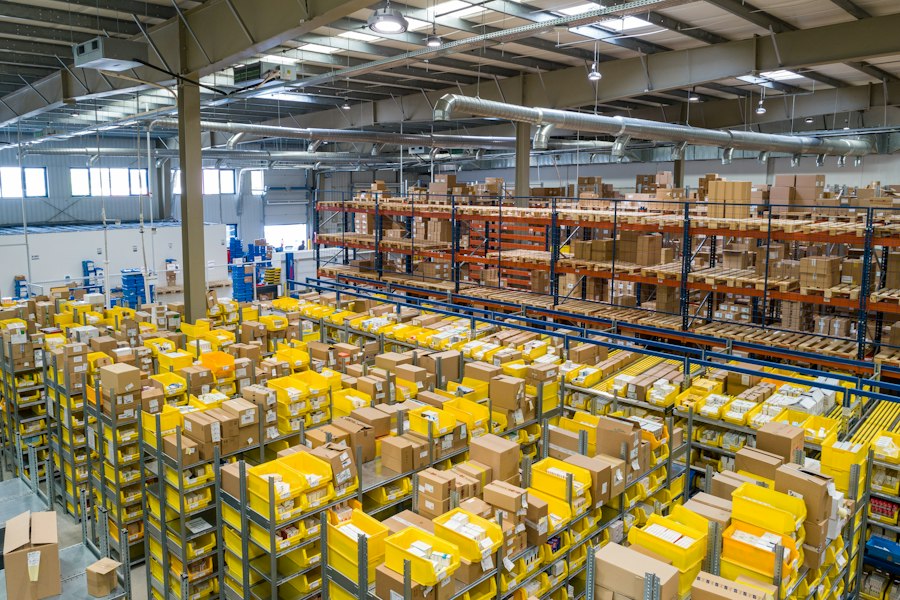
Digital supply chain platforms are giving operations leaders real-time visibility from supplier to customer — transforming a function historically managed through spreadsheets and phone calls into a data-driven strategic capability. Image: Unsplash (free for commercial use — download and host locally before publishing).
Why Tariffs and Geopolitics Have Changed the Supply Chain Calculus Permanently
The supply chain debate of the 2010s was primarily about efficiency. Just-in-time inventory, single-source suppliers in low-cost geographies, lean logistics networks optimised for cost under the assumption of stable trade conditions — all of these were rational choices in an environment where the primary variable being managed was unit cost. That environment is gone, and the evidence suggests it is not coming back.
Eighty-one percent of CEOs and COOs surveyed in 2025 say they are planning to relocate supply chains closer to their home markets — up from 63 percent in 2022. Nearly two thirds report actively implementing reshoring, near-shoring, or split-shoring strategies. These are not announcements — they are capital commitments that reflect a fundamental reassessment of where supply chain risk sits relative to supply chain cost. The calculation has changed because the cost of disruption has become measurable in ways it was not before. Businesses lost an average of $184 million in the peak pandemic disruption year. The cost of a single key supplier going offline, a shipping lane becoming temporarily inaccessible, or a new tariff regime making a previously economic sourcing geography nonviable — these are now quantified risks that belong in the same strategic conversation as market expansion and product investment.
Ninety-five percent of industrial and pharmaceutical supply chain leaders in PwC's survey expect supplier and material costs to increase significantly in the next twelve months. Eighty-nine percent say they will significantly change their supply chain strategies as a result of current US trade policies. These figures are not projections about distant futures — they describe active planning being done right now by the people who own supply chain decisions at major organisations. For technology vendors, professional services firms, and solution providers whose products help companies manage this complexity, understanding the specific nature of what operations leaders are trying to solve is the prerequisite for any productive commercial conversation.
The Just-Right Inventory Problem
One of the more concrete expressions of the shift away from pure efficiency optimisation is what supply chain practitioners are increasingly calling just-right inventory — a deliberate move away from just-in-time minimisation toward a calibrated balance between cost-efficient lean stock and strategic safety stock for critical components and materials. The pandemic exposed the fragility of lean-only inventory strategies with unusual clarity. The challenge in 2025 is that overcorrecting toward excess inventory is expensive in an environment of elevated carrying costs and uncertain demand patterns.
Getting this balance right is not a spreadsheet exercise. It requires the kind of real-time demand signal visibility, supplier lead time data, and scenario modelling capability that only integrated digital supply chain platforms can provide. Companies that can see their inventory positions accurately across all locations, connect those positions to live demand data, and model the financial impact of different inventory strategies under different disruption scenarios are making significantly better just-right decisions than those working from monthly reports and manual reconciliations. The IoT-enabled supply chain capabilities that PwC's survey identified as highly effective — used by only 33 percent of respondents but rated as very effective by 52 percent of those using them — represent exactly this kind of real-time inventory and logistics intelligence.

Predictive analytics applied to inventory management is reducing stockouts and overstock simultaneously — giving supply chain teams the data to make just-right decisions rather than just-in-time gambles in an environment where disruptions are not exceptional events but expected ones. Image: Unsplash (free for commercial use — download and host locally).
What Digital Supply Chain Transformation Actually Requires
The phrase digital supply chain gets used broadly enough that it has lost much of its operational meaning. For operations leaders evaluating where to invest, understanding what the phrase actually encompasses — and what the sequencing of investment should be — is more useful than a vendor category overview.
End-to-end visibility is the foundational layer and the one with the most consistent evidence of value. Achieving visibility across the full supply chain — from tier-one supplier through logistics provider to the final customer delivery point — requires integrating data from multiple systems that were not designed to talk to each other. ERP systems, warehouse management systems, transportation management systems, supplier portals, carrier tracking feeds, and customer order management systems all hold pieces of the supply chain picture that most organisations cannot see as a coherent whole in real time. Cloud-based supply chain platforms that aggregate and normalise this data are the infrastructure investment that everything else depends on. Without them, visibility is retrospective and partial. With them, it becomes prospective and actionable.
Predictive analytics built on that visibility layer is where the most significant operational value is being generated in 2025. AI systems that can model demand forecasts across SKUs, geographies, and customer segments with meaningfully greater accuracy than traditional statistical methods are reducing the error rate in planning that drives both stockout and overstock costs. Supply chain disruption prediction — using signals from geopolitical developments, weather events, supplier financial health, and logistics network congestion to identify likely disruptions before they become crises — is moving from experimental to production deployment in leading supply chains. The shift from reacting to disruptions to anticipating them is the operational difference that determines whether a supply chain is a competitive advantage or a recurring source of business risk.
Automation in logistics and warehousing is the third layer with clear near-term ROI. APQC research found that nearly a quarter of companies have already implemented robotic process automation in logistics and warehousing, with another two thirds planning to do so. The business cases are consistent: reduced handling errors, faster throughput, lower labour cost per unit processed, and the ability to scale volumes without proportional headcount increases. For organisations with high-volume, repetitive logistics operations, the payback on warehouse automation is typically measured in months rather than years.
Supplier Relationship Management: The Underinvested Capability
One of the consistently underinvested capabilities in supply chain digital transformation is structured supplier relationship management — the systematic approach to understanding, monitoring, and developing supplier performance rather than managing suppliers primarily through transactional procurement interactions.
The supply chain strategies that have proved most resilient through the disruptions of the past five years are built on genuine supplier relationships — where the buying organisation has deep visibility into supplier capacity, financial health, operational resilience, and strategic direction. This visibility does not arrive automatically with digital platforms — it requires the deliberate investment of time and attention in supplier partnerships that most procurement functions, under pressure to minimise transaction costs, have historically not prioritised.
In 2025, supplier relationship management is getting a digital upgrade that is making it significantly more tractable at scale. Supplier intelligence platforms that aggregate financial, operational, and risk data on supplier networks — flagging early warning signals before they become supply disruptions — are giving procurement and supply chain teams a level of supplier visibility that was previously only achievable for the handful of strategic suppliers that received dedicated relationship management attention. Extending that intelligence across the full supplier base, including tier-two and tier-three suppliers whose failures can propagate upstream in ways that are difficult to predict without data, is the next frontier of supply chain risk management.
The Sustainability Pressure That Is Reshaping Sourcing Decisions
Supply chain sustainability has moved from a corporate social responsibility conversation to a commercial and regulatory one in ways that have significantly changed its priority in sourcing decisions. The EU's Corporate Sustainability Due Diligence Directive — which requires large companies to identify, prevent, and mitigate human rights and environmental risks across their supply chains — is creating compliance requirements that extend deep into supplier networks in ways that most organisations have not yet fully mapped.
Beyond regulatory compliance, customer and investor pressure on supply chain sustainability is creating commercial incentives that are increasingly difficult to ignore. Research published in Frontiers in Environmental Science found that companies integrating environmental, social, and governance considerations into supply chain management outperform peers in operational efficiency, risk management, and long-term value creation. The supply chain leaders who are building ESG monitoring into their supplier assessment frameworks — rather than treating it as a separate reporting exercise — are discovering that the transparency required for sustainability reporting and the transparency required for supply chain risk management are largely the same capability. A supplier that cannot provide accurate data about its environmental practices is often also a supplier with limited operational visibility and higher risk of disruption.
Circular supply chain models — designing products and supply chains for reuse, remanufacturing, and material recovery rather than linear consumption — are attracting significant capital investment and generating measurable cost improvements in the industries where they have been implemented at scale. Electronics, automotive, and industrial equipment manufacturers are finding that recovering and reprocessing components at end of product life is both environmentally valuable and economically competitive with virgin material sourcing in categories where commodity prices are volatile.
The Skills Gap That Is Slowing Every Supply Chain Transformation
The Digital Supply Chain Institute has introduced a concept that is gaining traction among supply chain leaders: the idea of Purple People — professionals who combine deep supply chain domain expertise with meaningful capability in data analytics, technology platforms, and AI tools. The concept reflects a genuine and growing talent gap in the supply chain function.
Traditional supply chain roles were built around operational expertise — knowing how logistics networks function, how inventory is managed, how supplier relationships work. The digital supply chain requires all of that operational knowledge plus the technical capability to work with the platforms, data sets, and AI tools that are transforming how those functions are executed. Finding people with both sets of capabilities in meaningful depth is genuinely difficult. Most organisations are trying to solve this problem through a combination of upskilling existing supply chain professionals in digital tools and bringing data and analytics capability into supply chain teams from outside the function.
The organisations making fastest progress are the ones that have recognised this talent challenge explicitly and are investing in it as a programme in its own right — not assuming that digital capability will follow naturally from platform deployment, but deliberately building it as a parallel investment. A supply chain team with excellent data infrastructure and limited capability to analyse and act on that data is generating far less value from its technology investment than one that has built both in parallel. The technology is available and increasingly accessible. The limiting factor, consistently, is the human capability to use it well.
Turning Supply Chain From a Cost Function Into a Growth Engine
The most significant reframing available to operations and supply chain leaders in 2025 is the shift from thinking about supply chain as a cost function to be minimised toward thinking about it as a capability that can generate genuine competitive advantage. This is not just a change in language — it is a change in investment logic, in organisational positioning, and in the metrics used to evaluate supply chain performance.
Companies whose supply chains are significantly more responsive, more visible, and more resilient than their competitors are delivering on promises their competitors cannot — faster delivery, higher product availability, more reliable quality, and the ability to accommodate customer requirements that less flexible supply chains must decline. These capabilities generate measurable revenue effects that belong in the supply chain's business case alongside cost savings. A supply chain that enables a company to fulfill orders competitors cannot, to respond to demand spikes competitors cannot match, and to introduce products to market faster than competitors can source their materials is not a cost centre — it is a strategic asset.
Building that asset requires the kind of sustained investment, organisational attention, and leadership commitment that most supply chain functions have historically not attracted relative to customer-facing and product-development functions. That is changing, driven by the evidence of the last five years that supply chain capability determines competitive outcomes in ways that became impossible to ignore when everyone's supply chains were failing simultaneously. The companies that invested in resilience before it was urgent are the ones demonstrating through live performance what supply chain as competitive advantage actually looks like. The window to close the gap is open — but it is not indefinitely open.